Should You Travel to the Caribbean During Hurricane Season? (An Honest Answer From a Travel Advisor)
Let me save you from a decision you might regret.
Every year, I watch people talk themselves out of a Caribbean vacation because they've heard the words "hurricane season" and assumed that settles it. No trip. Too risky. Maybe next year.
And every year, those same people spend twice as much money booking in January or February for the exact same destinations they could have enjoyed in September for significantly less.
Here's what I want you to actually know about hurricane season travel — because the real answer is more nuanced than the internet usually gives you, and the right travel advisor can make all the difference.
I'm Chris, a Certified Travel Advisor and Certified Cruise Counselor at Black Diamond Travels. I specialize in Caribbean cruises, all-inclusive resorts, and group travel. And yes — I book trips during hurricane season all the time. Here's how I do it responsibly.

When Is Hurricane Season and What Does That Actually Mean?
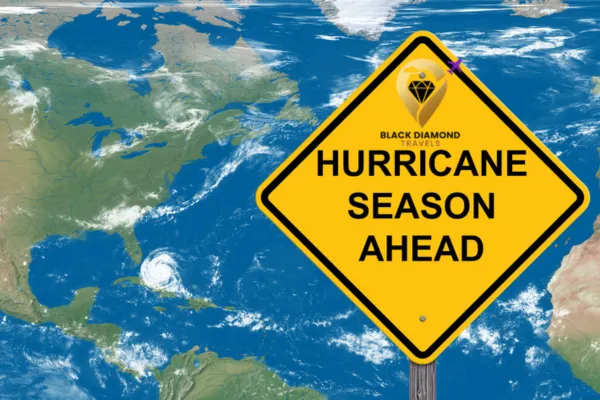
The Atlantic hurricane season officially runs from June 1 through November 30. That's six months. But not all six months carry the same level of risk.
The peak window is mid-August through mid-October, with September historically being the most active month. The early season months — June and July — and the tail end of the season — November — carry significantly lower risk for most destinations.
This is important because "hurricane season" and "hurricane likelihood" are not the same thing. The Caribbean sees dozens of named storms each year but the majority never make landfall or affect travelers. The chance that a hurricane hits the exact destination on your exact travel dates is genuinely low — though not zero, which is exactly why preparation matters.
The problem isn't hurricane season itself. The problem is traveling without a plan for what to do if something happens.

Why Traveling During Hurricane Season Can Actually Work in Your Favor
I'm going to tell you something that most people don't expect from a travel advisor: hurricane season is one of the best times to travel to the Caribbean — if you do it right.
Here's why.
The prices are significantly lower. All-inclusive resorts drop their rates during shoulder season. Cruise lines offer some of their best deals between August and October. The same cabin category, the same resort, the same experience — for meaningfully less money. I've seen savings of 20 to 40 percent compared to peak season pricing.
The crowds are thinner. You're not fighting for a beach chair. The pools are less packed. The specialty restaurant reservations are easier to get. The overall vibe is more relaxed.
The service is often better. Resorts staffed at lower capacity tend to deliver more attentive, personalized service. I've had clients come back from September trips raving about how different it felt compared to a spring break trip to the same property.
You can still go to most places. The Caribbean is a large region, and not all of it is equally affected during hurricane season. There are destinations I recommend with high confidence, even during peak months.
Where I Send Clients During Hurricane Season
Not every destination carries the same risk during hurricane season. Here's how I think about it.
Lower Risk Destinations During Peak Season:
🌴 Aruba, Bonaire, and Curacao — These three islands sit south of the main hurricane belt and have historically been among the safest Caribbean destinations during hurricane season. Aruba, in particular, rarely gets hit. If a client wants the Caribbean in September with minimal weather anxiety, this is usually my first recommendation.
🌴 Panama and Colombia — These destinations sit outside the hurricane zone entirely. If you're open to exploring beyond the traditional resort corridor, these are excellent options with very little hurricane risk year-round.
🌊 Mexico's Pacific Coast (Cabo San Lucas and Puerto Vallarta) — The Pacific side of Mexico operates under different weather patterns than the Caribbean. While the Pacific has its own storm season, the overlap with Atlantic hurricane season is not a direct concern here. These remain popular and accessible options during the summer and fall.
🌴 Southern Caribbean Islands — Trinidad and Tobago, Barbados, and Grenada sit farther south in the hurricane belt and historically see less hurricane activity than the northern Caribbean islands.
Higher Risk Destinations During Peak Season:
The northern Caribbean — including Puerto Rico, the Dominican Republic, the Bahamas, Jamaica, and the Lesser Antilles islands like St. Maarten and Antigua — sits in the most active zone during peak season. This doesn't mean you can't travel there, but I pair these destinations with solid travel insurance and flexible booking terms when we're booking during August through October.
Travel Insurance Is Not Optional During Hurricane Season
I want to say this as plainly as possible.
If you are traveling to the Caribbean between June and November without comprehensive travel insurance, you are not traveling responsibly. That's not a scare tactic. That's the honest professional opinion of someone who has helped clients navigate weather disruptions and seen the difference between those who were covered and those who were not.
Here's what you need to understand about travel insurance and hurricanes:
Standard travel insurance covers hurricane disruptions, but timing matters. Most policies cover trip cancellation or interruption due to a hurricane only if the storm is named after you purchased the policy. This means buying insurance as soon as you book — not two weeks before you travel — gives you the broadest protection window.
"Cancel for Any Reason" (CFAR) coverage is worth considering. Standard policies cover specific named events. CFAR coverage lets you cancel for any reason at all and typically reimburses 50 to 75 percent of your trip cost. It costs more but gives you maximum flexibility if the forecast makes you uncomfortable, even if a formal hurricane warning hasn't been issued.
Cruise lines have their own policies. Most major cruise lines will reroute or substitute ports when a hurricane threatens. This protects you physically, but it does mean your itinerary may change. Travel insurance covers the inconvenience on your end.
Resort hurricane clauses vary. Some all-inclusive resorts have hurricane guarantees that allow you to rebook if a storm hits during your stay. I know which resorts offer this, and I factor it into my recommendations during hurricane season bookings.
When I book a hurricane season trip for a client, we talk through all of this before anything is finalized. You should always know exactly what your coverage looks like before you travel.
What Cruise Lines Do When a Hurricane Hits
This is one of the most common questions I get from clients who are nervous about cruise travel during hurricane season — and the answer is actually reassuring.
Cruise ships are mobile. They move. When a hurricane is forecasted along a planned route, the captain and the cruise line's operations team reroute the ship to avoid the storm. This is standard practice, and it happens far more often than most passengers realize.
What this means for you practically is that your scheduled ports may change. You might end up in Nassau instead of Cozumel, or spend an extra sea day instead of a port stop. That's frustrating if you had a specific shore excursion planned. But the ship itself is not sailing into a hurricane.
The major cruise lines — including Virgin Voyages, Royal Caribbean, Celebrity, and Norwegian — have decades of experience navigating around Atlantic weather. Their safety protocols are robust. And their flexibility with itinerary changes during weather events is generally handled professionally and with client communication.
This is also where having a travel advisor matters. If your cruise itinerary changes significantly due to a storm, I'm the person in your corner advocating for compensation, onboard credits, or future cruise credits, depending on what the cruise line offers. You're not navigating that conversation alone.
The Role of a Travel Advisor During Hurricane Season
Let me be direct about this because I think it's one of the strongest arguments for working with an advisor when you're booking during this window.
When a hurricane is bearing down on your destination, and you're trying to change your flight, figure out if your resort has a hurricane policy, understand what your insurance covers, and decide whether to evacuate or shelter in place — that is not the moment you want to be reading fine print alone at 11 pm.
That is the moment you want to text your travel advisor.
I've had clients reach out during weather emergencies and what they needed more than anything was someone who already knew their booking, knew their coverage, knew who to call at the resort and the cruise line, and could help them make clear decisions quickly.
That's part of what you're getting when you work with me. Not just the trip planning. The peace of mind that if something changes — and sometimes it does — you have a professional handling it.
Tips for Smart Hurricane Season Travel
Here is my practical checklist for anyone booking Caribbean travel between June and November:
✅ Buy travel insurance the same day you book — not the week before you leave. Named storm coverage only applies to storms named after your purchase date.
✅ Consider CFAR coverage if you're traveling during peak season (August through October) and want maximum flexibility.
✅ Choose destinations with lower historical hurricane risk if weather anxiety is a concern — the ABC islands are my first recommendation here.
✅ Book refundable or flexible rate options where available, especially for flights.
✅ Ask specifically about your resort's hurricane policy before you finalize your booking. I do this for every client.
✅ Monitor forecasts in the weeks before travel, but avoid panicking at a storm that is two weeks out and tracking nowhere near your destination.
✅ Work with a travel advisor who knows this landscape, monitors conditions, and is available if things change.
Frequently Asked Questions About Hurricane Season Travel
Is it safe to travel to the Caribbean during hurricane season? Yes, with proper planning and travel insurance. The risk of a hurricane directly impacting your specific destination during your specific travel dates is relatively low, but not zero. Smart booking choices, flexible terms, and comprehensive insurance coverage are the keys to traveling with confidence.
What months are safest to travel during hurricane season? June and July carry a lower risk than the peak season. November is also generally lower risk. If you want to travel during the season but minimize weather concerns, these shoulder months are your best options.
Which Caribbean destinations are safest during hurricane season? Aruba, Bonaire, and Curacao sit south of the main hurricane belt and historically see far less hurricane activity than the northern Caribbean. They're my top recommendations for clients who want Caribbean travel during peak season with minimal weather anxiety.
Will my all-inclusive resort refund me if a hurricane hits? It depends on the resort and your booking terms. Some resorts have hurricane guarantee policies. Most will not issue refunds without the appropriate travel insurance in place. I review this with every client before finalizing a hurricane season booking.
Do cruise ships sail during hurricanes? No. Cruise ships reroute to avoid hurricanes. Your itinerary may change, but the ship will not sail into a storm. Cruise lines have extensive experience managing weather disruptions and communicate changes to passengers proactively.
Is hurricane season travel cheaper? Significantly. Rates at all-inclusive resorts and on cruise lines during shoulder season — particularly August through October — can be 20 to 40 percent lower than peak season pricing for comparable experiences.
Should I book hurricane season travel through a travel advisor? In my professional opinion, hurricane season is the time when having a travel advisor matters most. The booking decisions, insurance guidance, and real-time support during weather events make a meaningful difference in how that trip unfolds.
The Bottom Line
Hurricane season is six months long. It doesn't mean the Caribbean is closed for business.
It means you should travel smart. Know your destination. Understand the timing. Get the insurance. Book with flexibility. And have someone in your corner who knows this territory.
That's exactly what I do for my clients every year during hurricane season. And the ones who take the trip — with the right preparation — almost always come back saying they would do it again.
If you're thinking about a Caribbean trip this fall and you're not sure whether the timing makes sense for your destination and dates, let's talk it through. A free consultation is 30 minutes, and I'll give you an honest picture of your options — including what I'd recommend and why.
You might be closer to a great trip than you think.
[Book Your Free Consultation]


